
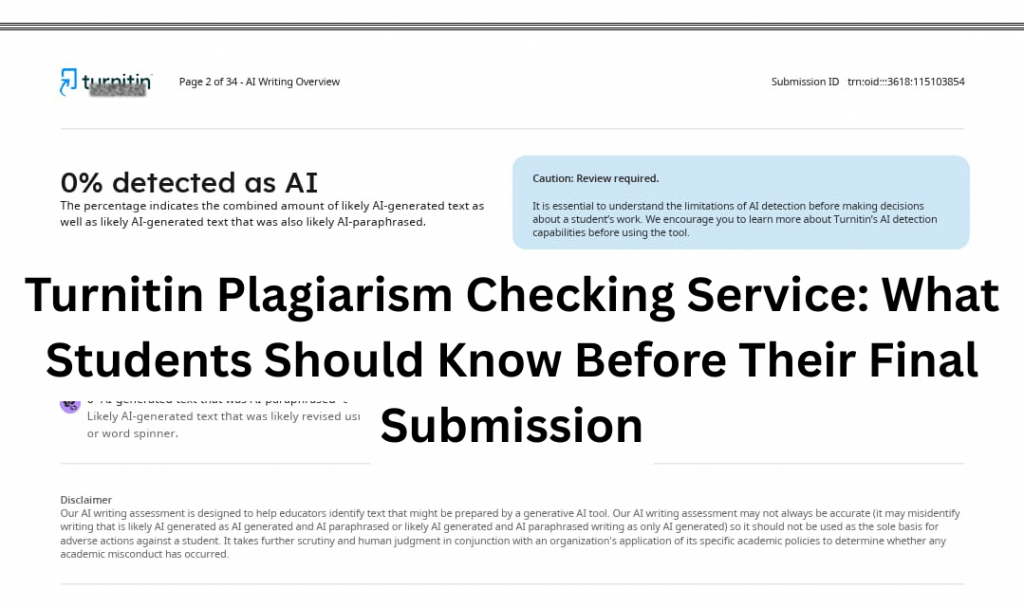
You’ve finally finished your assignment. The research is done, the references are in place, and after days or maybe weeks of writing, you’re ready to submit.
Then a thought pops into your head.
“What if my similarity score is higher than I expect?”
It’s a question almost every student asks at some point. Maybe you’ve quoted too much from your sources. Maybe you’ve paraphrased carefully but still aren’t sure whether it’s enough. Or perhaps you’re simply looking for peace of mind before clicking that final Submit button.
Read more: Turnitin’s Privacy Policy for Students, Teachers and Researchers- July 2026
That’s exactly why many students use a Turnitin plagiarism checking service before handing in their work. It’s not about trying to “beat” plagiarism detection software. It’s about making sure your writing is properly cited, your paraphrasing is effective, and there are no surprises waiting when your university generates its own report.
Let’s walk through what you should know before your final submission and why a similarity report is something to understand, not fear.
What Is a Turnitin Plagiarism Checking Service?
If you’ve studied at a college or university, there’s a good chance you’ve already heard of Turnitin.
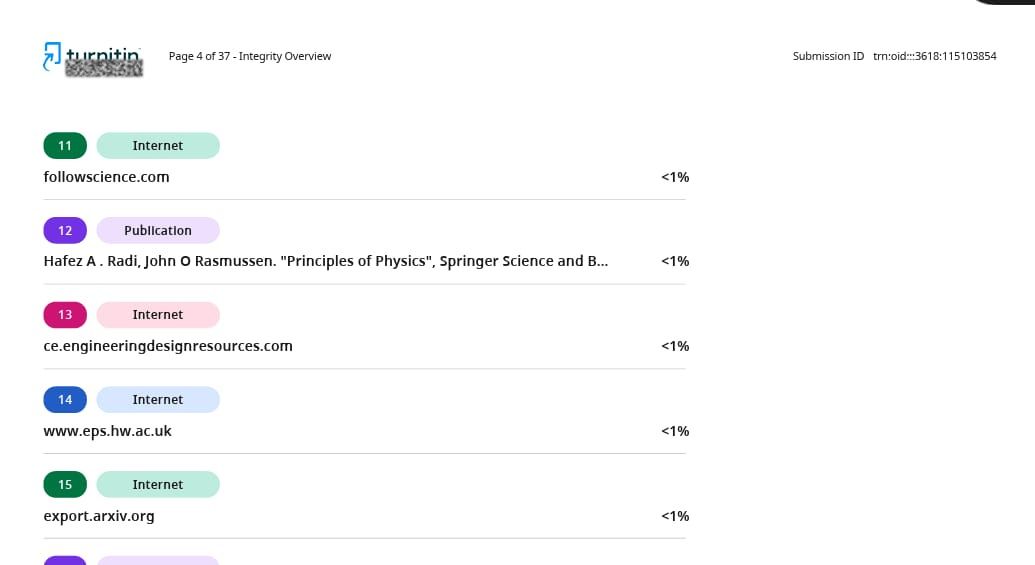
Many institutions use it as part of their academic integrity process. A Turnitin plagiarism checking service compares your document against an extensive database that includes published articles, websites, books, journals, and previously submitted academic papers.
Once the scan is complete, it generates a Turnitin similarity report showing text that matches existing sources.
Here’s something many students misunderstand:
A similarity report does not automatically mean plagiarism.
It simply highlights matching text.
Whether those matches are acceptable depends on context, citations, quotation usage, and institutional guidelines.
That’s why understanding your report is just as important as receiving it.
Why Students Should Run a Turnitin Check Before Submission
Imagine spending weeks writing a dissertation only to discover after submission that a few poorly paraphrased paragraphs increased your similarity score unnecessarily.
That’s a stressful situation and one that’s often preventable.
Running a Turnitin check before submission gives you the opportunity to review your work while you still have time to make improvements.
It helps you identify:
- Missing citations
- Overused quotations
- Weak paraphrasing
- Accidental text similarities
- Improper referencing
- Formatting inconsistencies
Think of it as a final quality check rather than a pass-or-fail test.
Many students assume that if they didn’t intentionally copy anything, they’re completely safe.
Unfortunately, academic writing isn’t always that straightforward.
Even properly researched papers can contain unexpected similarities that deserve a second look.
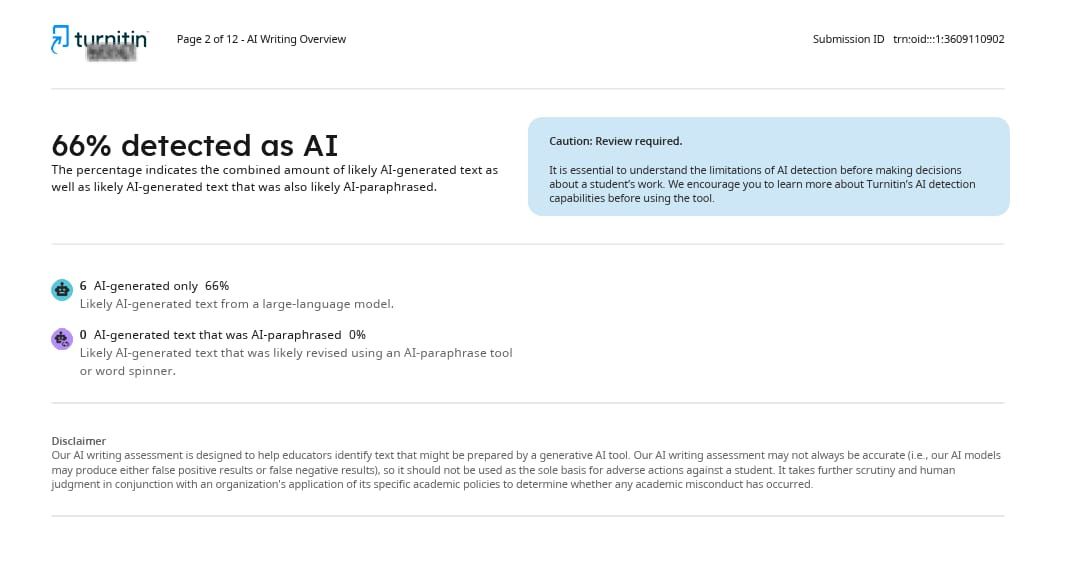
Understanding Your Turnitin Similarity Report
Receiving a Turnitin similarity report can feel intimidating the first time.
You see percentages, highlighted text, and dozens of matching sources.
Your first instinct might be to focus on one thing:
“Is my percentage too high?”
In reality, the percentage tells only part of the story.
For example:
A paper showing 18% similarity could be perfectly acceptable if most matches come from:
- Properly formatted references
- Standard academic phrases
- Correctly quoted material
- Technical terminology
On the other hand, a paper with only 8% similarity might raise concerns if those matches represent uncited copied paragraphs.
This is why experienced lecturers don’t judge papers based on percentages alone.
They evaluate the context behind the matches.
Check out: Features of Turnitin Similarity Report and how to Interpret it – July 2026
Instead of obsessing over the number, spend time reviewing where those similarities appear and whether they’re appropriately referenced.
What Appears in a Plagiarism Report?
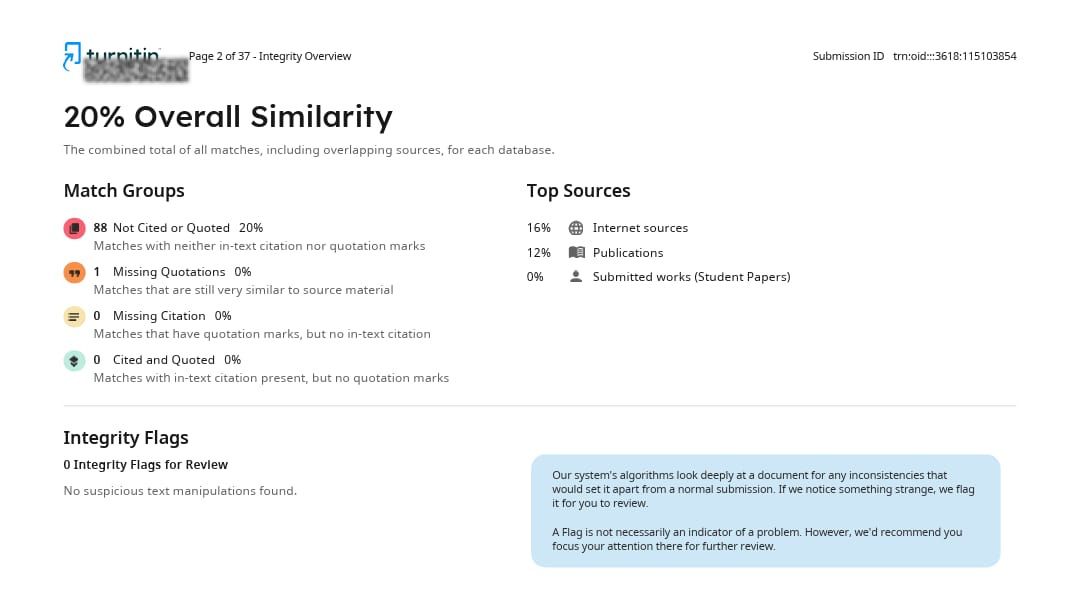
A plagiarism report highlights sections of your document that match existing sources within Turnitin’s database.
These matches may come from:
- Academic journals
- Books
- Websites
- Conference papers
- Student submissions
- Online publications
The report usually identifies:
- Matching passages
- Original sources
- Similarity percentages
- Citation overlaps
Not every highlighted sentence requires editing.
Sometimes the report simply identifies:
- Correct quotations
- Bibliographies
- Common terminology
- Institutional templates
Learning to interpret the report properly saves unnecessary rewriting.
Common Reasons Students Receive High Similarity Scores
Many students assume high similarity automatically means plagiarism.
That’s rarely the full story.
Some common reasons include:
Too Much Direct Quotation
Even when quotations are correctly cited, excessive quoting can increase similarity percentages.
Academic writing generally values analysis over lengthy quotations.
Weak Paraphrasing
Replacing a few words while keeping the original sentence structure often isn’t enough.
Effective paraphrasing means expressing ideas in your own voice while still crediting the original source.
Missing Citations
Sometimes students cite sources in one paragraph but forget another section discussing the same research.
Those small omissions can quickly appear in the report.
Reusing Previous Assignments
Some universities consider resubmitting your own earlier work without permission as self-plagiarism.
Always check your institution’s academic integrity policy.
What Is a No Repository Turnitin Check?
One phrase students often encounter is no repository Turnitin check.
If you’re unfamiliar with it, here’s why it matters.
Normally, when a document is submitted through Turnitin by an institution, it may be stored in Turnitin’s repository for future comparisons, depending on the institution’s settings.
A no repository Turnitin check means the document is checked for similarity without being permanently added to that repository.
Many students prefer this option when reviewing drafts before their official university submission.
It allows them to identify potential issues while avoiding duplicate matches when the final version is submitted through their institution.
Always confirm how a service handles document storage before uploading important academic work.
Read more: Turnitin’s Privacy Policy for Students, Teachers and Researchers- July 2026
How to Reduce Similarity Without Compromising Quality
One mistake students make is trying to reduce similarity percentages at all costs.
That’s the wrong goal.
Instead, focus on improving the writing itself.
Here are a few strategies:
Strengthen Your Paraphrasing
Read the original source.
Close it.
Then explain the idea as if you were describing it to a classmate.
Afterward, compare your version with the original to ensure you’ve genuinely rewritten the concept rather than simply changing a few words.
Review Your Citations
Double-check that every borrowed idea includes proper referencing even if you’ve paraphrased it.
Citation mistakes often contribute to unnecessary concerns.
Remove Unnecessary Quotations
If a quotation doesn’t add unique value, consider summarizing the idea instead.
Your own analysis should always remain the focus of the paper.
Should You Be Worried About Your Similarity Score?
Probably not.
At least, not without understanding what it actually represents.
Different universities and even different departments have different expectations.
Some courses naturally produce higher similarity because they require:
- Legal terminology
- Scientific methods
- Standard definitions
- Technical procedures
Context always matters.
Rather than chasing an arbitrary percentage, concentrate on producing original work supported by accurate citations.
That’s ultimately what academic integrity is about.
Final Tips Before You Submit
Before uploading your assignment, ask yourself a few simple questions:
- Have I cited every source correctly?
- Are my quotations necessary?
- Have I paraphrased ideas in my own words?
- Did I review my Turnitin similarity report carefully?
- Have I corrected any accidental similarities?
- Is my bibliography complete?
These small checks often make a significant difference.
Final Thoughts
Using a Turnitin plagiarism checking service before your final submission isn’t about finding ways to outsmart plagiarism detection software, it’s about making sure your work reflects your own ideas while giving proper credit to the research that informed them. A well-reviewed paper backed by accurate citations and thoughtful paraphrasing demonstrates academic integrity and gives you greater confidence when it’s time to submit.
Remember, a similarity report is simply a tool. It highlights matches so you can review them, not so you can panic over a percentage. By taking the time to understand your Turnitin plagiarism checking service results, checking your citations, and improving any sections that need attention, you’ll submit your work knowing you’ve done everything possible to meet your institution’s academic standards.